
Mysteries
AVocabularyMysteries and speculation
Mysteries
| a mystery · mysterious (загадочный) | a theory · an explanation |
| unexplained · unsolved (нераскрытый) | evidence (доказательства — uncountable) |
| a clue (улика, подсказка) | a rumour (слух) |
| disappear / vanish (исчезнуть) | a disappearance |
| a ghost · supernatural (сверхъестественный) | a conspiracy theory (теория заговора) |
| a hoax (розыгрыш, обман) | a coincidence (совпадение) |
| prove (доказать) · proof | investigate (расследовать) · an investigation |
Adjectives of opinion
believable ≠ unbelievable / far-fetched (неправдоподобный) · convincing (убедительный) ≠ unconvincing · logical ≠ illogical · plausible (правдоподобный) · bizarre (странный, причудливый) · spooky (жутковатый) · fascinating
- 1The police haven't found any that he was there.
- 2Nobody knows what happened — it's still an mystery.
- 3The photo of the "UFO" turned out to be a — it was a plate.
- 4His explanation was very — I believed every word.
- 5The detective found an important under the table.
- 6I don't believe in ghosts — that story is completely .
Ответы
1. evidence 2. unsolved / unexplained 3. hoax 4. convincing / plausible 5. clue 6. far-fetched / unbelievable
BGrammarModals of deduction
1. Deduction = a conclusion from evidence
We use modals to say how sure we are, based on what we see or know.
2. Present
| How sure? | Modal + infinitive | Example |
|---|---|---|
| ~95% yes | must | The lights are on. They must be at home. |
| ~50% | might / may / could | He's not answering. He might be busy. |
| ~95% no | can't | She can't be asleep — I can hear her. |
For actions in progress: modal + be + -ing: He must be working late.
3. Past: modal + have + past participle
| How sure? | Form | Example |
|---|---|---|
| ~95% yes | must have + p.p. | The ground is wet. It must have rained. |
| ~50% | might / may / could have + p.p. | She's late. She might have missed the bus. |
| ~95% no | can't / couldn't have + p.p. | He can't have stolen it — he was with me. |
4. The most important trap
The opposite of must (deduction) is can't, NOT mustn't:She mustn't be at home → She can't be at home.
(mustn't means "it's not allowed" — a different meaning.)
5. Form check
After modals: be, not is: He must is → He must be.
Past: have + past participle: He must went → He must have gone.
По-русски
must be = «должно быть, наверняка» · might be = «возможно» · can't be = «не может быть»
must have done = «должно быть, сделал» · can't have done = «не мог сделать»
- 1He's been working for 12 hours. He (must / can't) be tired.
- 2That (mustn't / can't) be Tom — he's in London.
- 3The window is broken. Someone (must have / must) thrown a ball.
- 4She (might have forgotten / might forgot) about the meeting.
- 5They (can't have / mustn't have) finished already — it's only 9 a.m.
Ответы
1. must 2. can't 3. must have 4. might have forgotten 5. can't have
Deduction about the present
We use modal verbs to say how sure we are about something, based on evidence.
| How sure? | Modal | Example |
|---|---|---|
| 95% ✓ — I'm sure it's true | must | The lights are on. They must be at home. |
| 50% — possibly | might / may / could | He's not answering. He might be in a meeting. |
| 95% ✗ — I'm sure it isn't true | can't | She can't be asleep — I can hear her talking. |
For actions in progress: modal + be + -ing: He must be working late.
Watch out!
The opposite of must (deduction) is can't, not mustn't:She mustn't be at home → She can't be at home.
could = possible: It could be true. · couldn't = impossible: It couldn't be true.
- 1I'm sure he's tired. He's been working all day. → He must be tired.
- 2Perhaps she's at the gym. →
- 3I'm sure that isn't Tom's car. His car is red. →
- 4Maybe they're on holiday. →
- 5I'm sure you're joking! →
- 6It's possible that the shop is closed today. →
Ответы
2. She might / may / could be at the gym. 3. That can't be Tom's car. 4. They might / may / could be on holiday. 5. You must be joking! 6. The shop might / may / could be closed today.
Deduction about the past: modal + have + past participle
| How sure? | Modal | Example |
|---|---|---|
| ✓ sure | must have + p.p. | The ground is wet. It must have rained last night. |
| possible | might / may / could have + p.p. | She's late. She might have missed the bus. |
| ✗ sure | can't / couldn't have + p.p. | He can't have stolen the money — he was with me all evening. |
- 1The window is broken and there's a football inside. Some children (kick) it through the window.
- 2Aidos looks really happy. He (pass) his exam.
- 3She (see) you at the party — she wasn't there.
- 4I can't find my keys. I (leave) them at work, or maybe in the car.
- 5They (go) to bed already — all the lights are on.
- 6The professor (forget) about the lecture. It's 10:30 and he isn't here.
Ответы
1. must have kicked 2. must have passed 3. can't have seen 4. might have left 5. can't have gone 6. might have forgotten / must have forgotten
- 1Your friend didn't come to dinner and isn't answering her phone. → She might have… / She must…
- 2There's a strange car outside your neighbour's house every night. →
- 3Your colleague is wearing a suit today. He usually wears jeans. →
Ответы
Possible answers: 1. She might have forgotten. / Her phone must be dead. 2. Your neighbour might have a new partner. / It must belong to a visitor. 3. He must have an interview / an important meeting. / He might be going to a wedding after work.
CListeningUnexplained mysteries
- 1When was the Mary Celeste found?
- 2What was strange when it was found? A It was badly damaged. B Nobody was on board. C All the cargo had gone.
- 3What was missing from the ship?
- 4Which theory does the presenter find most convincing?
- 5What does the presenter say about the sea-monster theory? A It's possible. B It's far-fetched. C It has been proved.
Текст аудио
Presenter: Welcome to "Unsolved". Today: one of the most famous mysteries of the sea, the Mary Celeste. In December 1872, sailors on another ship found the Mary Celeste in the middle of the Atlantic Ocean. She was in good condition, and her cargo — 1,700 barrels of alcohol — was still there. There was plenty of food and water. But there was nobody on board. The captain, his wife, their two-year-old daughter and seven sailors had all vanished. The only thing missing was the ship's small lifeboat.
So what happened? There are many theories. Some people said that pirates must have attacked the ship. But that can't be true — pirates would have taken the valuable cargo. Others think a storm might have frightened the crew. However, the weather reports show the sea was quite calm. One popular theory — and I find it the most convincing — is about the cargo itself. Nine of the barrels were later found to be empty. Alcohol can produce gas. The captain might have smelt it, thought the ship was about to explode, and ordered everyone into the lifeboat. Then the lifeboat could have been lost in the waves. And of course there are some far-fetched ideas too — a giant sea monster, for example — but there's absolutely no evidence for that. We'll probably never know for sure.
Ответы
1. B 2. B 3. A 4. C 5. B
- 1The man thinks his wallet .
- 2The woman thinks the neighbours .
- 3The boy thinks his sister .
- 4The colleagues think Mark .
Текст аудио
| Narrator | One. |
|---|---|
| Man | I can't find my wallet anywhere. |
| Woman | When did you last have it? |
| Man | At the supermarket. I paid… and then I put it on the counter to pack the bags. Oh no — I must have left it there! |
| Narrator | Two. |
| Woman | There's a huge pile of boxes outside next door. |
| Man | And a big van. The neighbours must be moving out. They said they might sell the house. |
| Narrator | Three. |
| Boy | Mum, someone's eaten the last piece of cake! |
| Mother | Well, it can't have been me — I've been at work all day. |
| Boy | Then it must have been Lily. She's got chocolate on her face! |
| Narrator | Four. |
| Woman | Mark's late again. It's not like him. |
| Man | The roads are terrible today. He might have got stuck in traffic. Or he might be ill. |
Ответы
1. must have been left at the supermarket (on the counter) 2. must be moving out 3. must have eaten the last piece of cake 4. might have got stuck in traffic / might be ill
DSpeakingSpeculating
Speculating about a photo
It looks like… · It looks as if / as though… · They might be… · She must have just… · It can't be…, because… · I'd say… · Judging by the…, I think…
 A
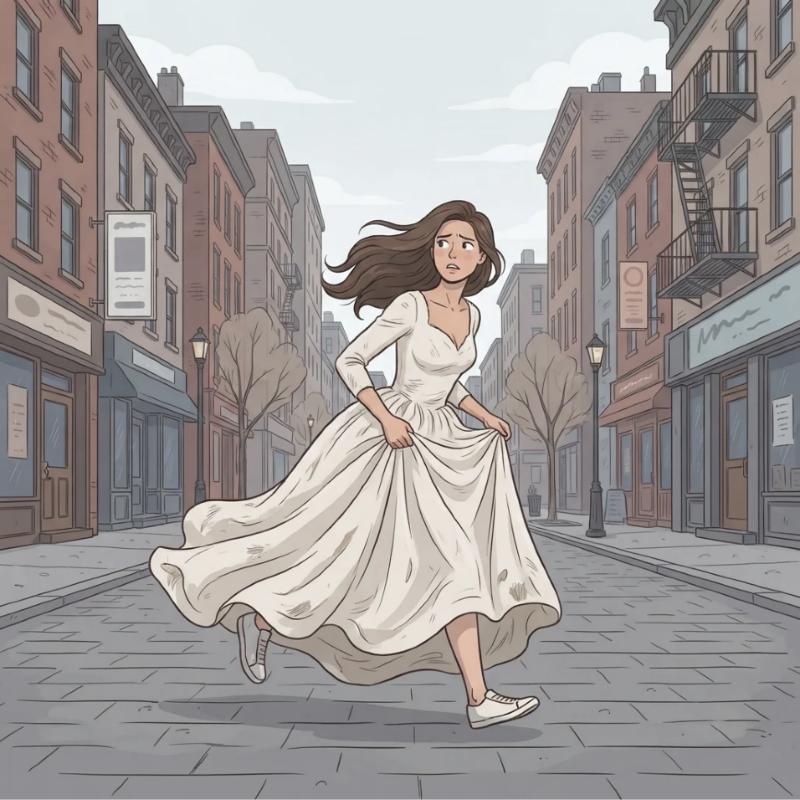 B
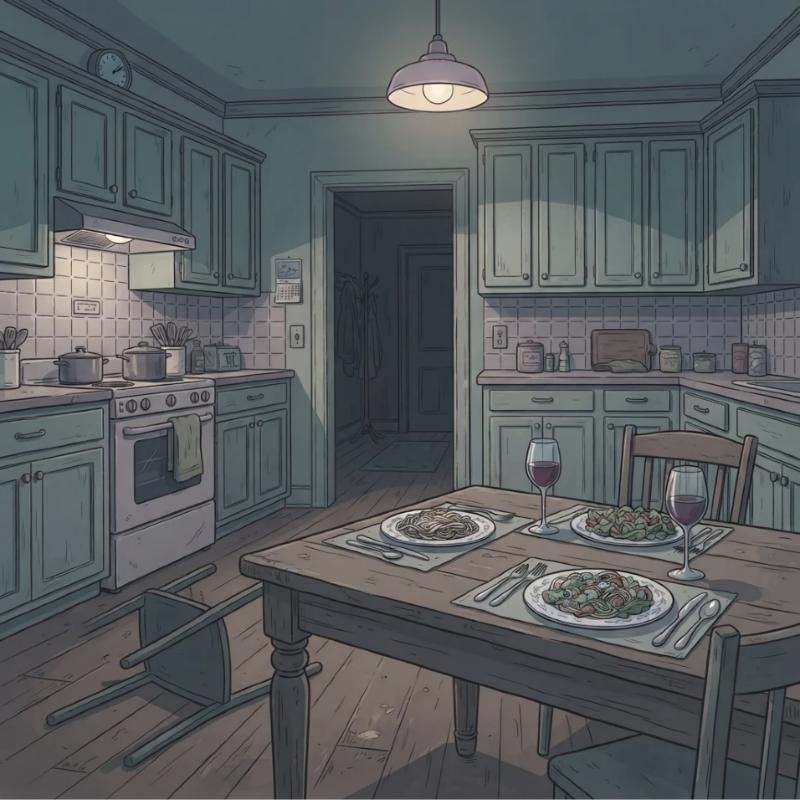 C
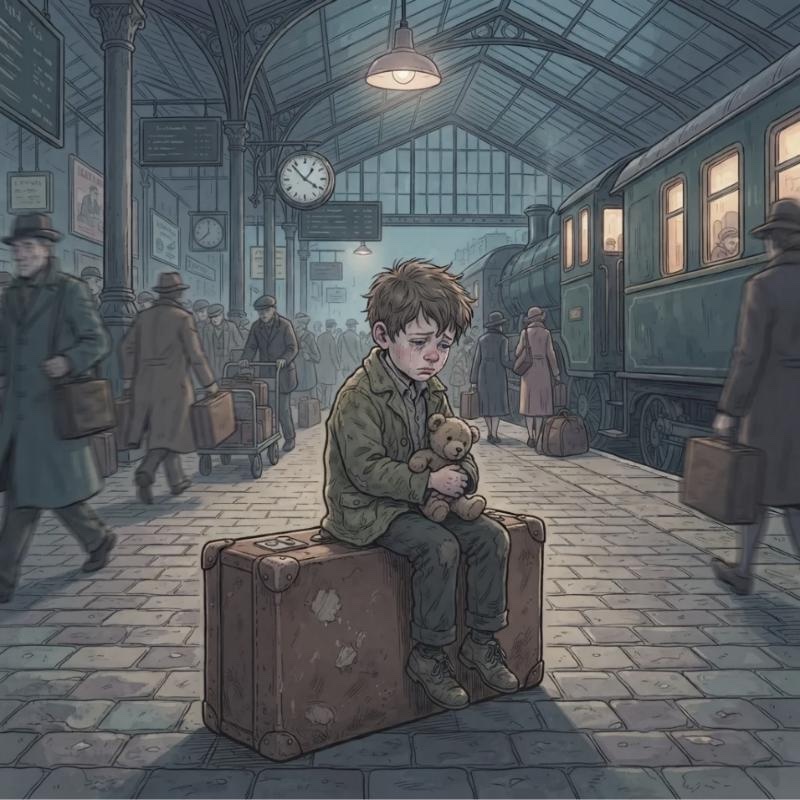 D
- 1A man is standing in the rain outside a theatre, holding flowers, looking at his watch.
- 2A woman is running down the street in a wedding dress.
- 3A kitchen: the table is set for two, the food is cold, and one chair has fallen over.
- 4A small boy is sitting alone on a suitcase at a busy train station.
- Do you know any mysteries from your country's history? What do you think happened?
- Why do people enjoy mysteries and conspiracy theories?
- Do you believe in anything supernatural? Why / why not?
Check yourself · Проверь себя
- I can use must, might, could, can't to make deductions about the present and the past.
- I can talk about mysteries and evaluate theories.
- I can speculate about photos and situations.
EExtra practiceModals of deduction
- 1She's been working for 12 hours. She exhausted.
- 2That Tom's phone — his is black, and this one is white.
- 3I don't know where Ali is. He in the library, or maybe at the gym.
- 4They're speaking Portuguese, so they from Brazil or Portugal.
- 5You hungry — you've just had a huge lunch!
- 6Everyone is wearing coats. It cold outside.
Ответы
1. must be 2. can't be 3. might be 4. must be (might be) 5. can't be 6. must be
- 1I'm sure she forgot. → She must have forgotten.
- 2Perhaps they missed the train. →
- 3I'm sure he didn't see us. →
- 4Maybe I left my wallet in the taxi. →
- 5I'm sure it was very difficult for you. →
- 6It's impossible that they finished already. →
Ответы
2. They might have missed the train. 3. He can't have seen us. 4. I might have left my wallet in the taxi. 5. It must have been very difficult for you. 6. They can't have finished already.
- 1The ground is wet. It (must rain / must have rained) in the night.
- 2Listen! Someone (must be playing / must have played) the piano upstairs.
- 3He (can't be / can't have been) at home yesterday — I called five times.
- 4She speaks Japanese perfectly. She (must live / must have lived) in Japan.
- 5They aren't answering. They (might sleep / might be sleeping).
Ответы
1. must have rained 2. must be playing 3. can't have been 4. must have lived 5. might be sleeping
A man was found asleep on a park bench in winter. He was wearing an expensive suit but no shoes. In his pocket there was a plane ticket to Paris for yesterday and a wedding ring, but no wallet.
Ответы
Possible answers: He must have been very cold. Someone might have stolen his shoes and wallet. He can't have flown to Paris yesterday. He might have been at a party / a wedding. He must be rich — the suit is expensive. He could have had too much to drink.
- 1The police found an important (clue) at the scene.
- 2His (disappear) is still a mystery.
- 3There is no (prove) that ghosts exist.
- 4The story sounds completely (believe). I don't think it's true.
- 5The police are (investigation) the robbery.
Ответы
1. clue 2. disappearance 3. proof 4. unbelievable 5. investigating
- 1She mustn't be at home — her car isn't there.
- 2He must to be tired.
- 3They can't have went to bed — the lights are on.
- 4You might lost your keys at the gym.
- 5It must be rained last night.
Ответы
1. She can't be at home… 2. He must be tired. 3. They can't have gone to bed… 4. You might have lost your keys at the gym. 5. It must have rained last night.
- 1Он, должно быть, на работе.
- 2Она не могла этого сказать!
- 3Возможно, они опоздали на автобус.
- 4Ты, должно быть, шутишь!
- 5Наверное, он уже ушёл домой.
Ответы
1. He must be at work. 2. She can't have said that! 3. They might (may / could) have missed the bus. 4. You must be joking! 5. He must have gone home already. / He's probably gone home already.
Ответы
Your own answer.