
My day
AVocabularyDaily routine and time
Daily routine · Распорядок дня
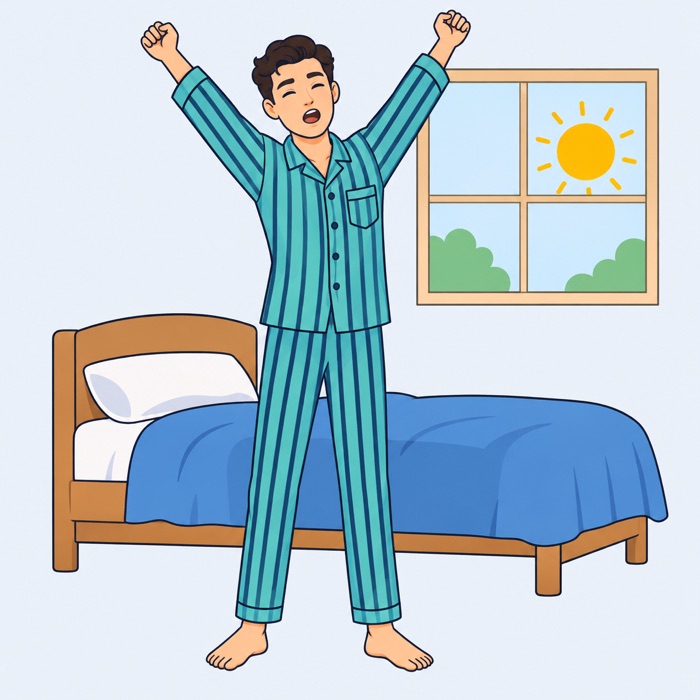
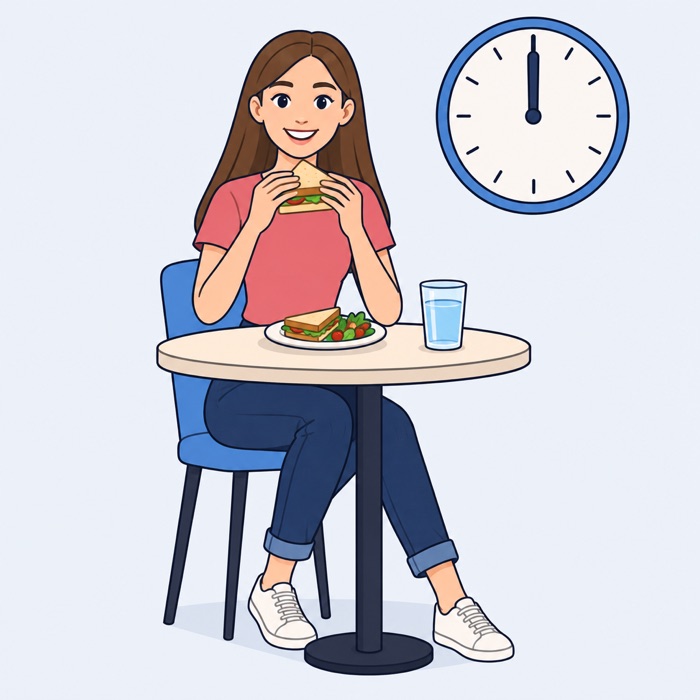
| get up — вставать | have breakfast — завтракать |
| have a shower — принимать душ | go to work / school — идти на работу / в школу |
| start work — начинать работу | have lunch — обедать |
| finish work — заканчивать работу | go home — идти домой |
| cook dinner — готовить ужин | have dinner — ужинать |
| watch TV — смотреть телевизор | go to bed — ложиться спать |
 1
 2
 3
 4
 5
 6
 7
 8
- 1
- 2
- 3
- 4
- 5
- 6
- 7
- 8
Ответы
1 get up · 2 have a shower · 3 have breakfast · 4 go to work · 5 have lunch · 6 cook dinner · 7 watch TV · 8 go to bed
- have lunch
- get up
- go to bed
- have breakfast
- start work
- have dinner
- finish work
- have a shower
Ответы
1 get up, 2 have a shower, 3 have breakfast, 4 start work, 5 have lunch, 6 finish work, 7 have dinner, 8 go to bed (2 and 3 can change places)
Telling the time · Который час?
What time is it? — It's …
| 7:00 seven o'clock | 7:15 quarter past seven | 7:30 half past seven |
| 7:45 quarter to eight | 7:10 ten past seven | 7:50 ten to eight |
Simple way: 7:15 = seven fifteen, 7:45 = seven forty-five.
at + time: I get up at 7 o'clock. · in the morning / in the afternoon / in the evening / at night
past / to
past — «после»: 10 past 7 = 7:10 (десять минут восьмого).
to — «до»: 10 to 8 = 7:50 (без десяти восемь).
half past seven = 7:30 (половина восьмого — внимание: в русском «восьмого», в английском seven!).
- 1It's .
- 2It's .
- 3It's .
- 4It's .
- 5It's .
- 6It's .
Ответы
1. nine o'clock 2. half past six 3. quarter past three 4. quarter to twelve 5. twenty past eight 6. five to five
1. 2. 3. 4. 5.
Текст аудио
| Narrator | One. |
|---|---|
| A | Excuse me, what time is it? |
| B | It's half past ten. |
| Narrator | Two. |
| A | What time is the film? |
| B | It's at quarter to eight. |
| Narrator | Three. |
| A | What time is it now? |
| B | It's ten past two. |
| Narrator | Four. |
| A | When is the class? |
| B | It starts at nine o'clock. |
| Narrator | Five. |
| A | What time is the train? |
| B | At twenty to six. |
Ответы
1. 10:30 2. 7:45 3. 2:10 4. 9:00 5. 5:40
BGrammarPresent simple: I, you, we, they
1. Когда используем
Present simple — время для того, что происходит регулярно, обычно, всегда: привычки, распорядок дня, факты.
I get up at 7 every day. · We live in Almaty. · They drink tea in the morning.
2. Утверждение (+): просто глагол
С I, you, we, they глагол стоит в начальной форме, без изменений:
I work. · You work. · We work. · They work.
3. Отрицание (−): don't + глагол
don't = do not. Это «помощник», который делает отрицание:
I don't work on Sunday. · They don't like coffee.
4. Вопрос (?): Do + подлежащее + глагол
| Вопросительное слово | Do | Подлежащее | Глагол | |
|---|---|---|---|---|
| — | Do | you | like | tea? |
| Where | do | you | live? | |
| What time | do | they | get up? |
Краткие ответы: Yes, I do. / No, I don't. (не Yes, I like.)
5. Слова-подсказки
every day / week · usually · always · often · on Mondays · at the weekend · in the morning
Сравните с русским
В русском вопрос задаём интонацией: «Ты работаешь?». В английском нужен do:You work here? → Do you work here?I not like coffee. → I don't like coffee.
Запомните
- Не добавляйте am / are к обычным глаголам:
I am work→ I work. - После don't / do глагол без изменений.
- 1you / do / coffee / drink / ? →
- 2don't / on Sunday / I / work →
- 3do / live / where / they / ? →
- 4get up / we / at 7 →
Ответы
1. Do you drink coffee? 2. I don't work on Sunday. 3. Where do they live? 4. We get up at 7.
Present simple
We use the present simple for routines and things that are always true.
| + | − | ? |
|---|---|---|
| I work in a bank. | I don't (do not) work at night. | Do you work here? |
| You live in Almaty. | You don't live in Astana. | Where do you live? |
| We get up at 7. | We don't get up early on Sunday. | What time do you get up? |
| They like coffee. | They don't like tea. | Do they like tea? |
Short answers: Do you work here? — Yes, I do. / No, I don't.
Present simple — «обычно, всегда»
Это время для того, что вы делаете регулярно: каждый день, по понедельникам, обычно.
Для отрицания и вопроса нужен помощник do: I don't like… / Do you like…?
Не путайте: I not work ✗ → I don't work ✓. You work here? ✗ → Do you work here? ✓
- 1I (live) in a small flat.
- 2We (not / watch) TV in the morning.
- 3They (have) lunch at one o'clock.
- 4I (not / drink) coffee.
- 5You (speak) English very well!
- 6My parents (not / work) on Saturday.
Ответы
1. live 2. don't watch 3. have 4. don't drink 5. speak 6. don't work
- 1you / get up / early? → Do you get up early? —
- 2you / have breakfast / every day? →
- 3you / like / coffee? →
- 4what time / you / go to bed? →
- 5where / you / have lunch? →
Ответы
2. Do you have breakfast every day? 3. Do you like coffee? 4. What time do you go to bed? 5. Where do you have lunch? (Answers: your own — Yes, I do. / No, I don't. / I go to bed at…)
CListeningA student's day
| Time | Activity |
|---|---|
| 6:45 | |
| have breakfast | |
| 8:30 | |
| 1:00 | |
| go home | |
| 11:30 |
Текст аудио
| Interviewer | Arman, tell me about your day. What time do you get up? |
|---|---|
| Arman | I get up early, at quarter to seven. Then I have a shower, and I have breakfast at seven fifteen. |
| Interviewer | What do you have for breakfast? |
| Arman | Eggs and tea. I don't drink coffee. |
| Interviewer | And when do your classes start? |
| Arman | They start at half past eight. I go to university by bus. |
| Interviewer | Do you have lunch at university? |
| Arman | Yes, I do. I have lunch with my friends at one o'clock in the café. |
| Interviewer | When do you go home? |
| Arman | At five o'clock. In the evening I study, and I play computer games with my friends. |
| Interviewer | And what time do you go to bed? |
| Arman | Late! At half past eleven. |
Ответы
6:45 get up · 7:15 have breakfast · 8:30 classes start · 1:00 have lunch · 5:00 go home · 11:30 go to bed
- 1Arman drinks coffee for breakfast.
- 2He goes to university by bus.
- 3He has lunch at home.
- 4He plays computer games in the evening.
Текст аудио
| Interviewer | Arman, tell me about your day. What time do you get up? |
|---|---|
| Arman | I get up early, at quarter to seven. Then I have a shower, and I have breakfast at seven fifteen. |
| Interviewer | What do you have for breakfast? |
| Arman | Eggs and tea. I don't drink coffee. |
| Interviewer | And when do your classes start? |
| Arman | They start at half past eight. I go to university by bus. |
| Interviewer | Do you have lunch at university? |
| Arman | Yes, I do. I have lunch with my friends at one o'clock in the café. |
| Interviewer | When do you go home? |
| Arman | At five o'clock. In the evening I study, and I play computer games with my friends. |
| Interviewer | And what time do you go to bed? |
| Arman | Late! At half past eleven. |
Ответы
1. F (He drinks tea.) 2. T 3. F (in the café at university) 4. T
DSpeakingYour typical day
- What time do you get up?
- Do you have breakfast? What do you have?
- How do you go to work / school?
- Where do you have lunch?
- What do you do in the evening?
- What time do you go to bed?
"I get up at seven. First, I have a shower. Then I have breakfast. After that, I go to work…"
Check yourself · Проверь себя
- I can talk about my daily routine.
- I can ask and say the time.
- I can use the present simple with I, you, we, they.
EExtra practicePresent simple (I, you, we, they) · time
| 1. get | a. a shower |
| 2. have | b. TV |
| 3. go | c. up |
| 4. watch | d. dinner |
| 5. cook | e. to bed |
Ответы
1 c, 2 a, 3 e, 4 b, 5 d
- 18:30 → half past eight / eight thirty
- 210:15 →
- 36:45 →
- 41:05 →
- 512:00 →
Ответы
2. quarter past ten / ten fifteen 3. quarter to seven / six forty-five 4. five past one / one oh five 5. twelve o'clock (midday / midnight)
- 1I / like / tea (+) → I like tea.
- 2We / live / in London (−) →
- 3They / work / at the weekend (−) →
- 4You / speak / good English (+) →
- 5I / eat / meat (−) →
- 6My parents / get up / at 6 (+) →
Ответы
2. We don't live in London. 3. They don't work at the weekend. 4. You speak good English. 5. I don't eat meat. 6. My parents get up at 6.
| 1. you like coffee? | a. At 11 o'clock. |
| 2. Where you live? | b. By bus. |
| 3. What time you go to bed? | c. Yes, I do. |
| 4. How you go to work? | d. In a flat in the centre. |
Ответы
do in all questions · 1 c, 2 d, 3 a, 4 b
- 1you / do / breakfast / have / ? →
- 2they / where / do / work / ? →
- 3don't / TV / I / watch →
- 4at / we / lunch / one / have →
- 5you / what time / get up / do / ? →
Ответы
1. Do you have breakfast? 2. Where do they work? 3. I don't watch TV. 4. We have lunch at one. 5. What time do you get up?
- 1I not like milk. →
- 2You work here? →
- 3Where you live? →
- 4We go to bed in 11 o'clock. →
- 5They don't to work on Sunday. →
- 6Do you like coffee? — Yes, I like. →
Ответы
1. I don't like milk. 2. Do you work here? 3. Where do you live? 4. We go to bed at 11 o'clock. 5. They don't work on Sunday. 6. Yes, I do.
- 1Я встаю в семь часов.
- 2Мы не смотрим телевизор утром.
- 3Где вы обедаете?
- 4Ты пьёшь кофе? — Нет.
- 5Они ложатся спать поздно.
Ответы
1. I get up at seven o'clock. 2. We don't watch TV in the morning. 3. Where do you have lunch? 4. Do you drink coffee? — No, I don't. 5. They go to bed late.
Ответы
Your own answers.